



About This Item
Description
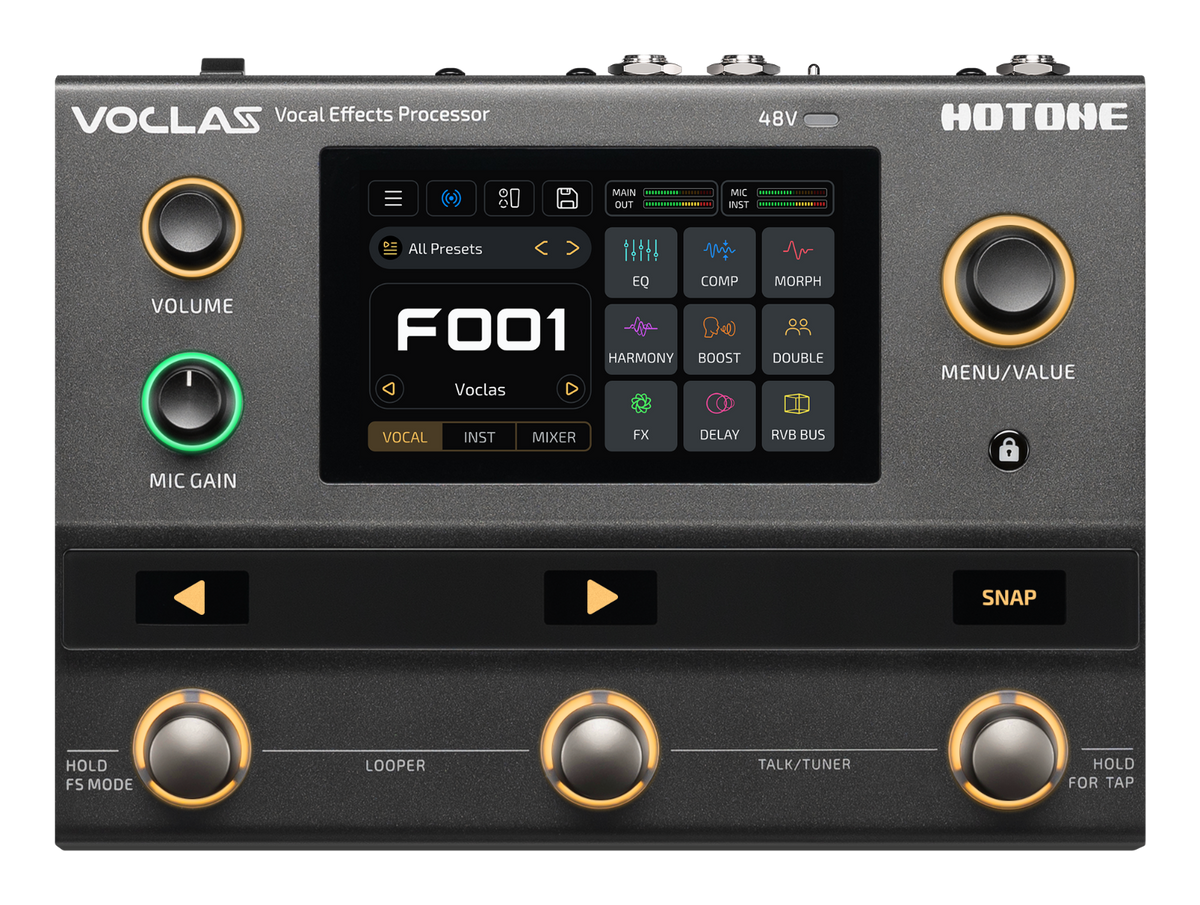
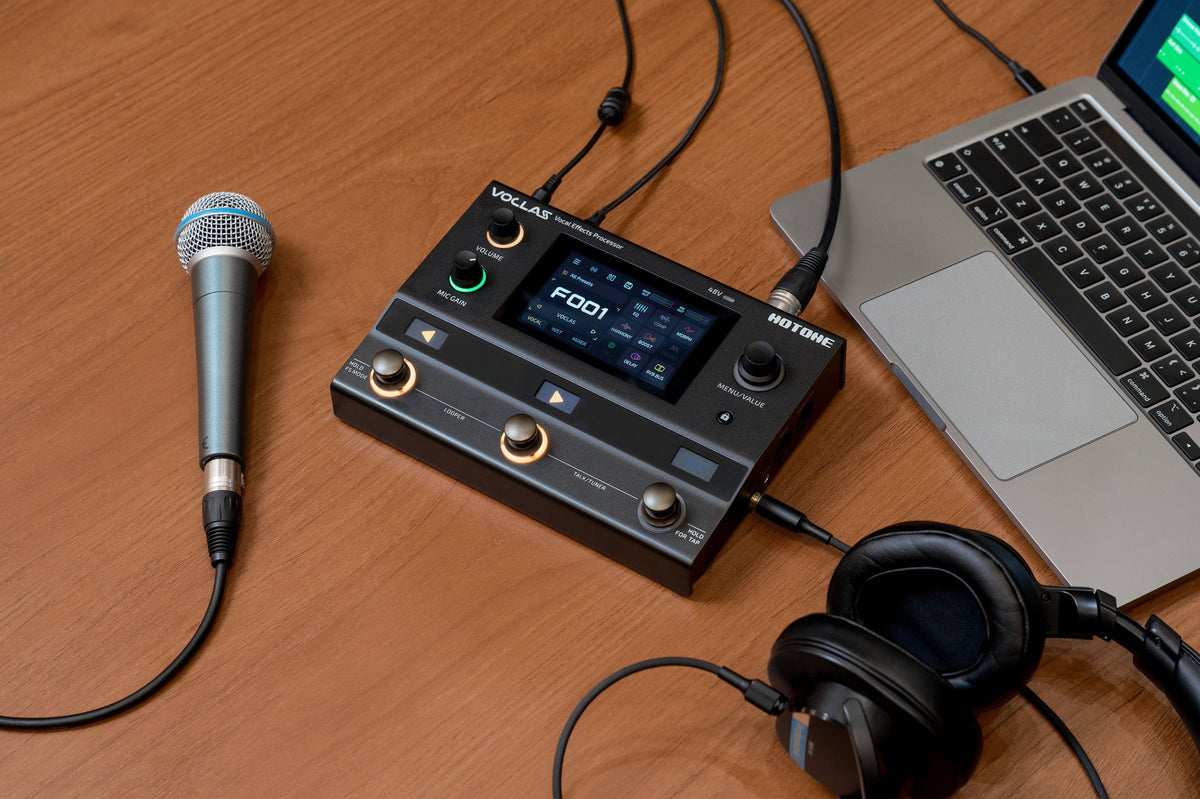
The Hotone Voclas VE-300 is a vocal effects processor for singers on stage and in the studio. It combines an analog mic preamp, vocal clean-up tools, pitch correction, up to three harmony voices, a looper and a separate guitar effects chain in one unit with a color touchscreen and three footswitches.
Who it's for
- Lead singers in a band who want vocal effects, harmonies and preset changes at their feet.
- Singer-songwriters who sing and play guitar: the vocal chain is combined with a separate guitar effects chain, and the built-in looper covers both.
- Home and mobile recording: the USB audio interface sends the mixed signal and separate dry vocal and instrument signals to a computer; OTG works plug-and-play with iOS devices.
Vocal front end
- Analog mic preamp with +62 dB of gain.
- De-Esser, Anti-Feedback and Natural Gate.
Nine vocal effect modules
EQ, Compressor, Morph, Double, Boost, Harmony, FX, Delay and Reverb. Together with a guitar amp simulation module, they form a well-organized, low-latency effects chain.
- Pitch correction: fast, low-latency pitch correction for live performance and studio recording. AT-Tune algorithms provide natural correction as well as electronic pitch-shifting effects.
- Morph: vocal transformation algorithms, including AT-Tune, Real-Time MIDI Vocal Engine, Vocoder, vocal transformation synthesizer emulation and overtone throat singing simulation.
- Classic electronic vocals: Vocoder and Talkbox algorithms, plus voice transformation effects such as Robot, Monster and vocal instrument emulation.
- Vocal widening: a dedicated vocal widening algorithm.
- EQ: multiple EQ algorithms, from simple presets to detailed adjustment.
- FX: wah, tremolo and auto-filter.
- More creative effects: modulation, saturation and coloration, automatic filtering and stutter effects.
- Delay and reverb: a range of delay and reverb algorithms for spatial effects.
Harmony: up to three voices
Run up to three harmony voices at once, each with its own pitch rules, pan and other parameters, so one singer can create four-part harmony. Choose how the harmonies follow the music:
- Manual Harmony Mode with detailed control over the harmony settings.
- Guitar Harmony Recognition Mode, which adapts the harmonies to your guitar chords in real time.
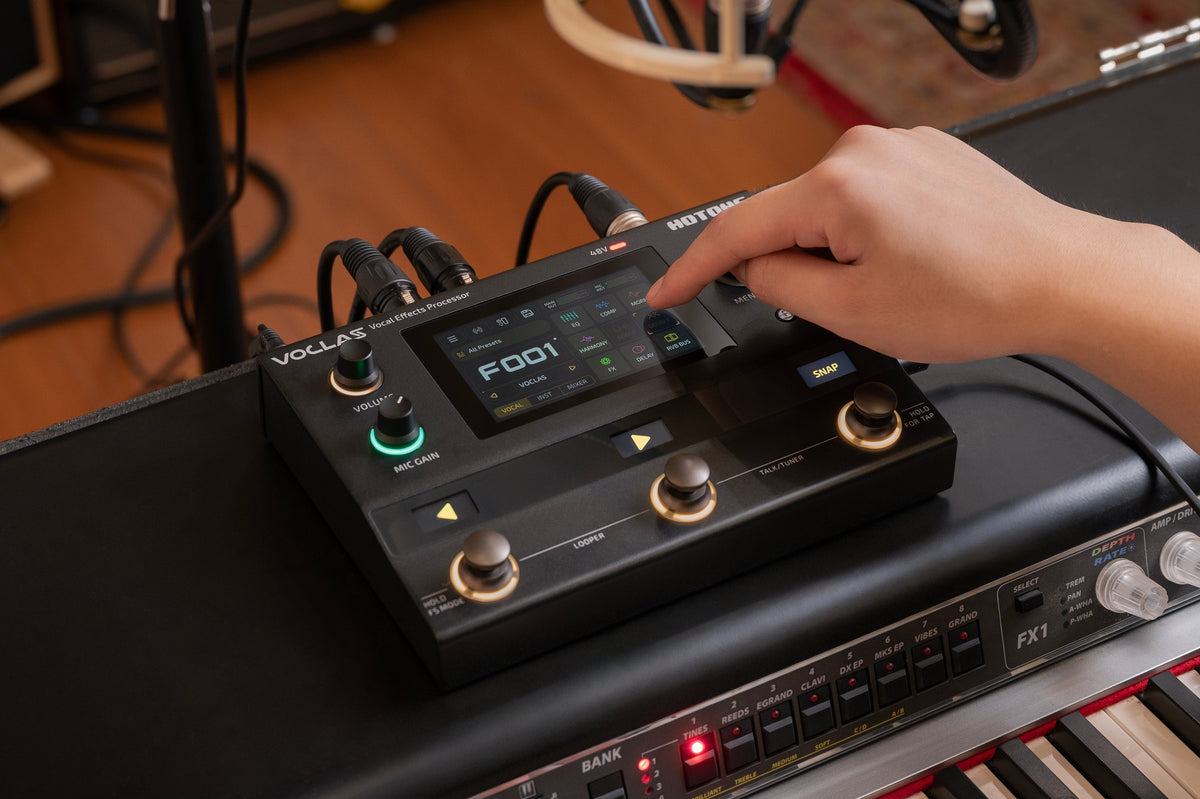
- MIDI Harmony Recognition Mode, which generates harmonies from a MIDI instrument performance in real time.
- AI Automatic Vocal Harmony Mode, which creates harmonies based on what you sing.
Harmonies can also be controlled via MIDI, including from a keyboard.
Note: the vocal-to-instrument conversion, sample synthesizer, MIDI vocal and throat singing simulation algorithms in the Morph module cannot be used at the same time as Harmony.
Guitar chain and looper
- A dedicated guitar chain with Clean Amp, Overdrive Amp and Acoustic simulations.
- The guitar chain works independently of the vocal chain.
- A built-in looper with centralized control for vocals and instruments. Loops are not kept after power-off, and the looper does not record vocals and guitar as separate tracks.
- The main output includes processed signals, looper playback, AUX and Bluetooth audio. For USB recording, AUX and Bluetooth audio can be included in or excluded from the recording mix.
- Headphone monitoring can use the dry or wet signal.
Control on stage
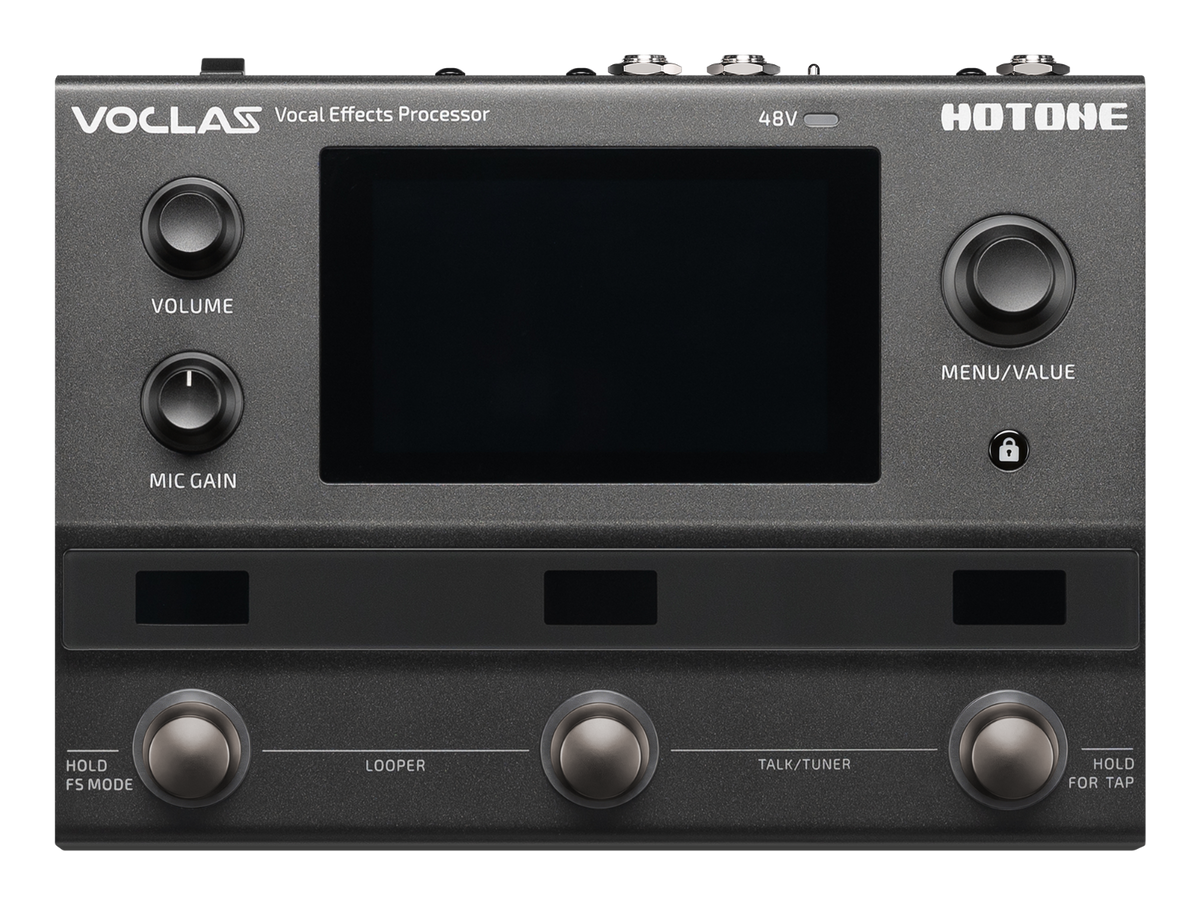
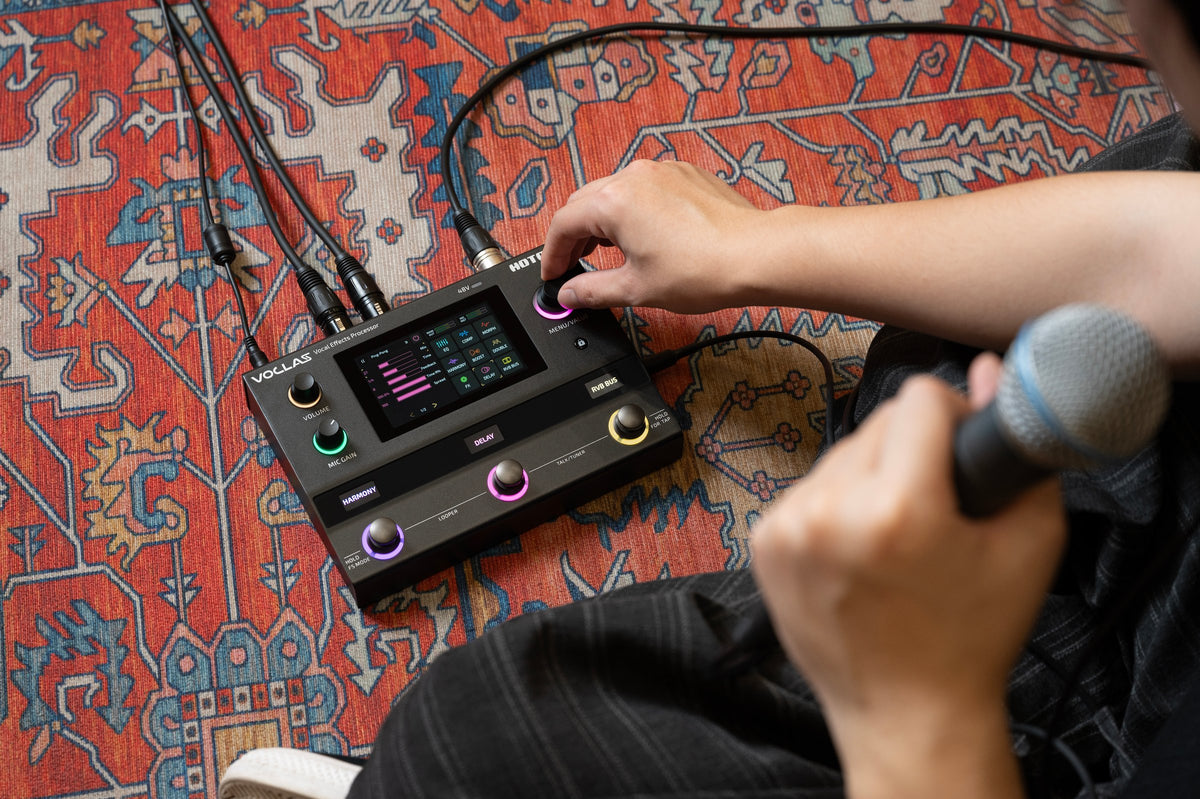
- Color touchscreen with a mixer-style interface, plus three footswitches with a footswitch display.
- Use the touchscreen and footswitches to switch presets, toggle custom effect modules, switch SNAP scenes with one press and turn on Talk Mode.
- Footswitch shortcuts: press FS2 and FS3 together for TALK/TUNER, press FS1 and FS2 together for the LOOPER, hold FS1 to switch between preset and effect-module control modes, and hold FS3 for TAP tempo.
- A real-time graphical display of your vocal pitch for monitoring and practice.
- External control: connect footswitches, expression pedals and MIDI devices.
Connections and power
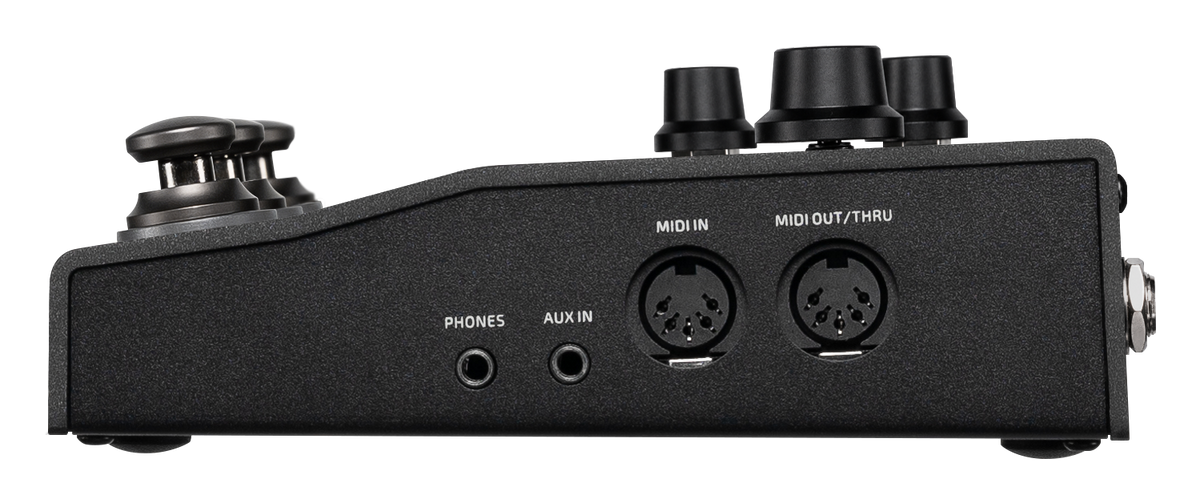
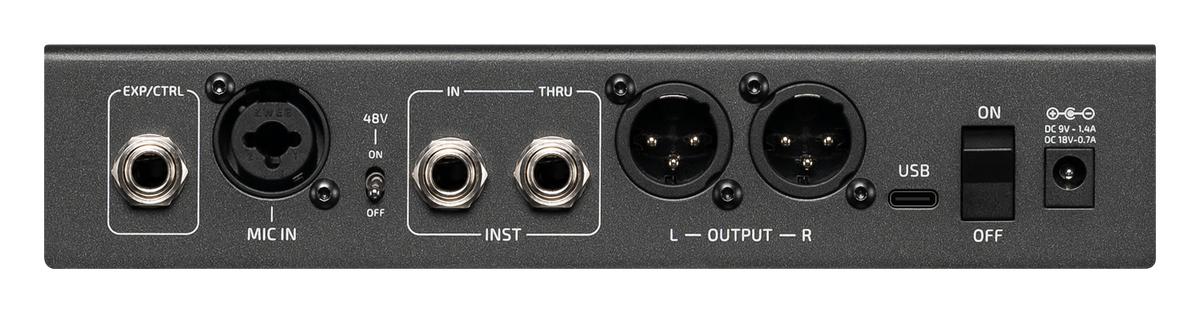
- Inputs: mic input (1 × XLR/¼" combo jack, mono), instrument input (1 × 1/4" TS, mono), AUX IN (1 × 1/8" TRS, stereo).
- Outputs: main outputs (2 × XLR, balanced), instrument THRU (1 × 1/4" TS, mono; passes the instrument signal even when the unit is powered off), headphones (1 × 1/8" TRS, stereo).
- Control: EXP/CTRL input (1 × 1/4" TRS), 5-pin MIDI IN and MIDI OUT/THRU.
- USB: Type-C USB audio interface, 4-in/4-out. Channels 1–2 carry the mixed stereo signal; channels 3–4 carry the separate dry vocal and dry instrument signals, so you can re-process (reamp) them later. OTG: plug-and-play with iOS devices; some Android devices may not be compatible.
- Bluetooth: audio playback.
- Power: an 18 V power supply is included. Manufacturer input specification: 9–18 V DC, center negative.
Specifications
| Mic input impedance | 2 kΩ |
| Instrument input impedance | 1 MΩ |
| AUX IN impedance | 20 kΩ |
| Balanced output impedance | 1 kΩ |
| Headphone output impedance | 47 Ω |
| Mic preamp gain | +62 dB |
| A/D and D/A | 32-bit, 192 kHz |
| DSP | 32-bit processing |
| SNR | 108 dB |
| DNR | 110 dB |
| Maximum input level | +11 dBu |
| Frequency response | 20 Hz–20 kHz, ±0.5 dB |
| Dimensions (L × W × H) | 209.2 × 154.9 × 59 mm |
| Weight | 1095.2 g (manufacturer data) |
| USB audio | 4-in/4-out (1–2: mixed stereo; 3–4: dry vocal and dry instrument) |
| Package dimensions | 34 × 18.5 × 8.5 cm |
| Shipping weight (gross) | 1.53 kg |
In the box
- Hotone Voclas VE-300 Vocal Effects Processor
- 18 V power supply
Warranty
1 year, serviced by Pedalzoo for customers in Canada and the United States.
FAQ
Can I use it with my guitar? Yes. Plug your guitar into the instrument input to use the dedicated guitar chain with Clean Amp, Overdrive Amp and Acoustic simulations.
How many harmony voices can it create? Up to three at once, so together with your lead vocal you can build four-part harmony. The Morph module's vocal-to-instrument conversion, sample synthesizer, MIDI vocal and throat singing simulation algorithms cannot run together with Harmony.
Can harmonies follow my guitar or keyboard? Yes. Guitar Harmony Recognition Mode adapts the harmonies to your guitar chords, and MIDI Harmony Recognition Mode generates harmonies from a MIDI instrument performance.
Can I record with it? Yes. Over USB Type-C it works as a 4-in/4-out audio interface: channels 1–2 carry the mixed stereo signal, and channels 3–4 carry the dry vocal and dry instrument signals for reamping. With OTG it works plug-and-play with iOS devices; some Android devices may not be compatible.
Does the looper save loops? No. Loops are not kept after the unit is powered off, and the looper does not record vocals and guitar as separate tracks.
Does my guitar signal pass when the unit is off? Yes. The INST THRU output passes the instrument signal even without power.
How is it powered? Use the 18 V power supply included in the box. The manufacturer specifies a 9–18 V DC, center-negative input.