


About This Item
Description
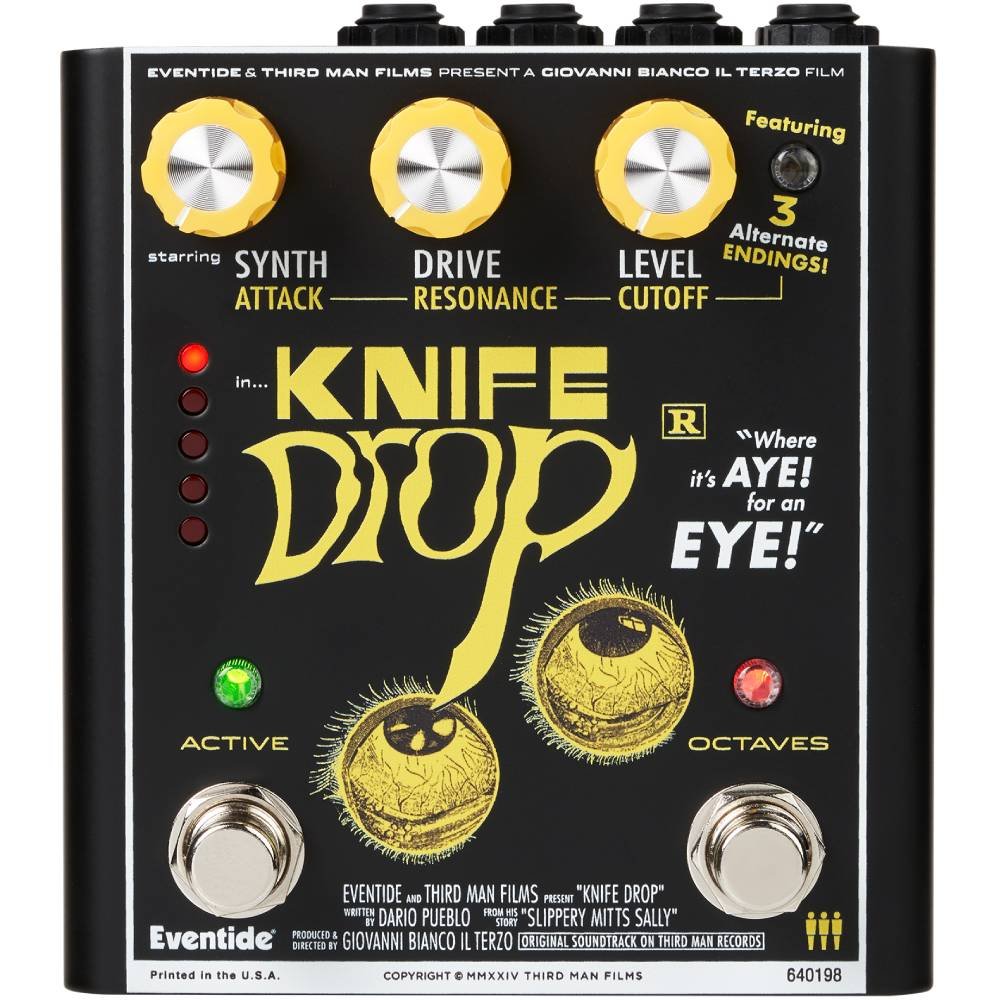
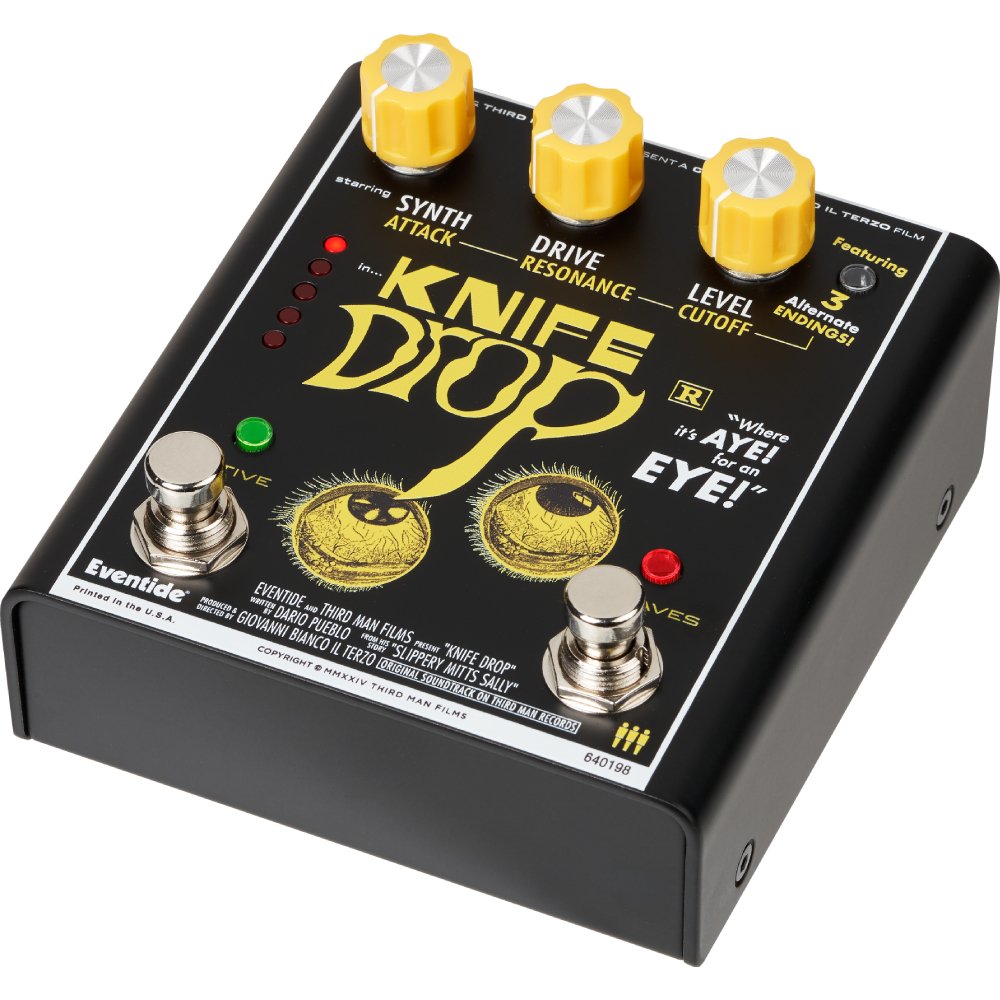
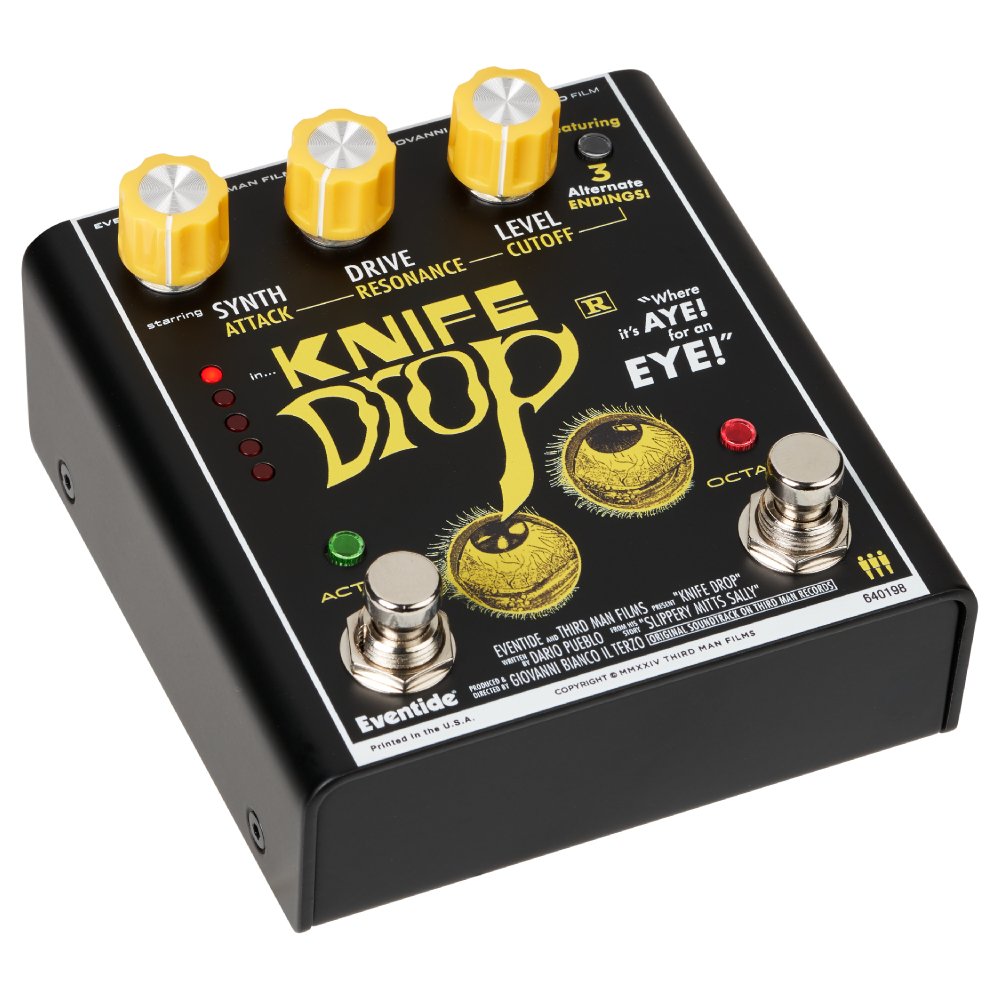
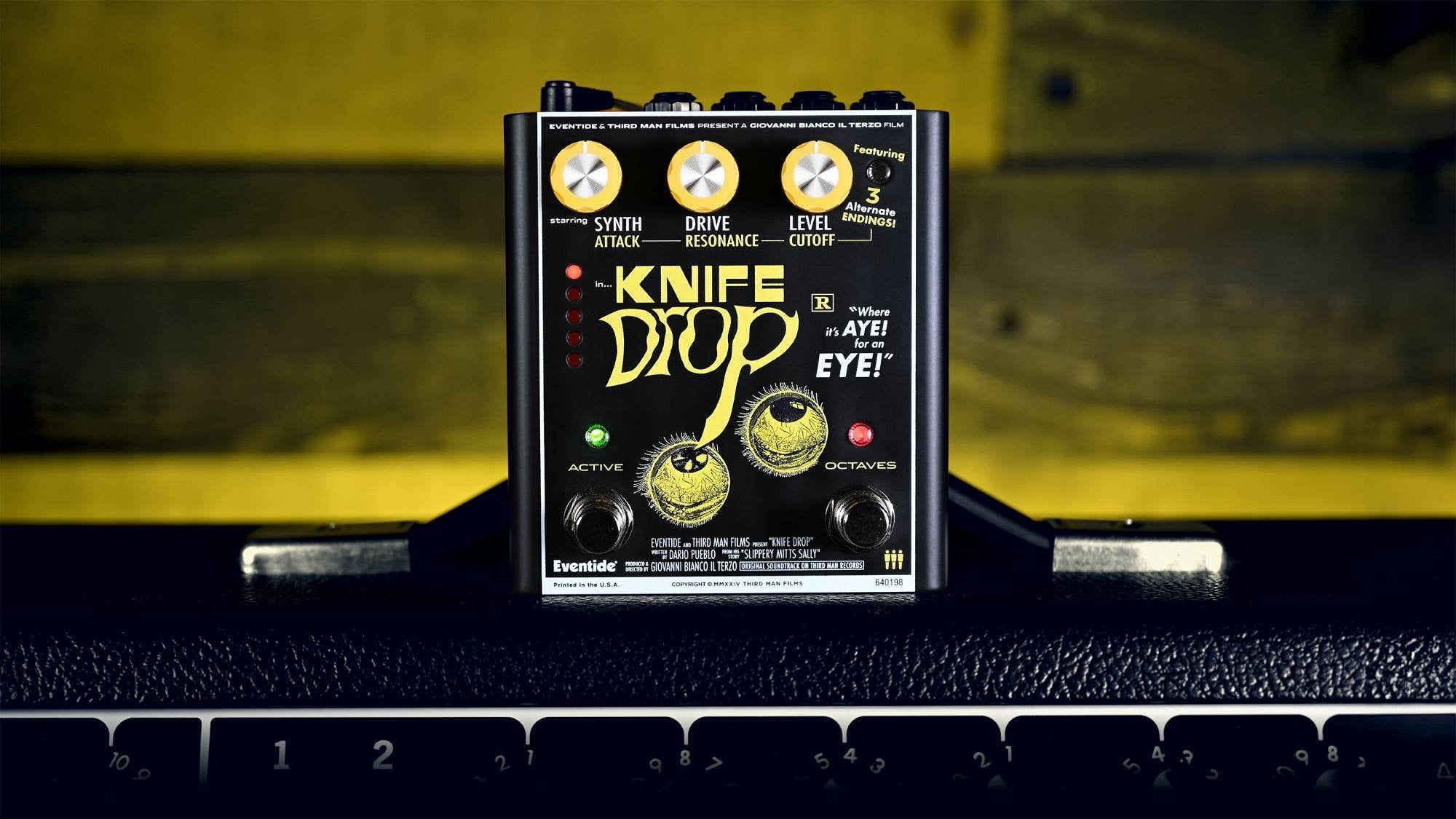
Knife Drop takes your guitar, a monophonic synth voice and a pair of octaves, blends them however you like, then destroys the result with an aggressive distortion and sweeps a resonant filter across it with an ADSR-style envelope.
Which Eventide dirt pedal is this?
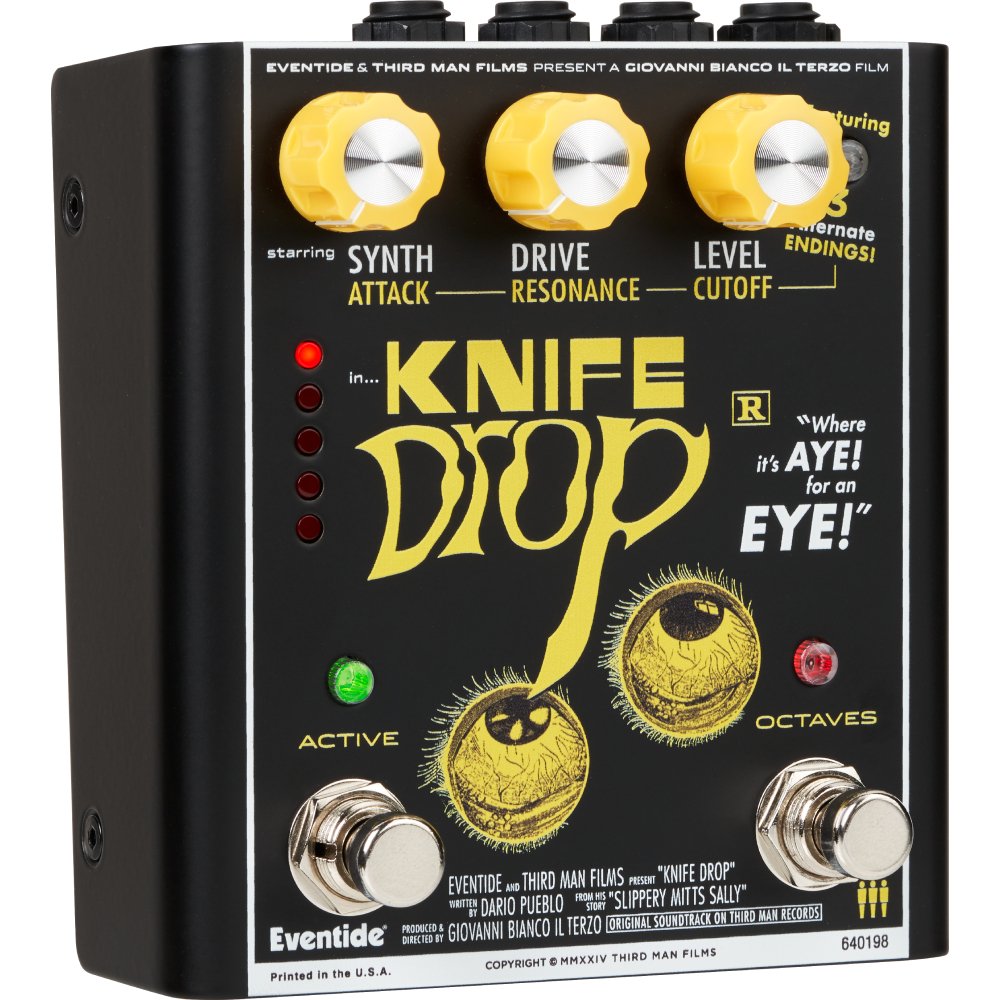
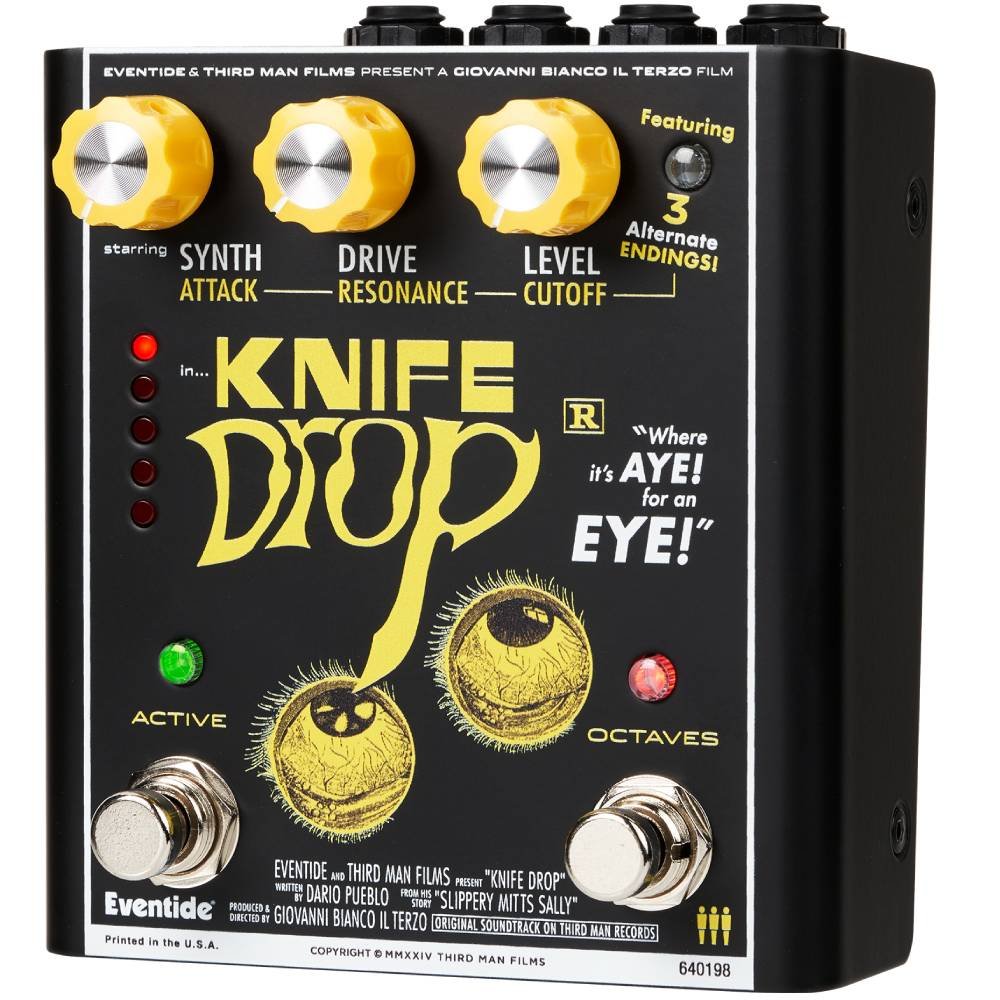
Knife Drop is the .9 series fuzz and synth box, built as an Eventide and Third Man Hardware collaboration. It is a three-way blend of your input signal, a monophonic analog-style synth and footswitch-enabled octaves, all crushed by a distortion stage with a resonant lowpass filter that can sit before or after the dirt. If you want overdrive and Uni-Vibe rather than fuzz and synth, that is Riptide. For pitch-shifted harmonies without the fuzz, use PitchFactor.
Why guitarists choose the Knife Drop
- A three-way blend of dry signal, monophonic synth and octaves means you decide how much guitar survives, which is rare in an octave fuzz.
- Upper and sub octaves are enabled from a footswitch, so a riff can drop an octave mid-phrase without touching a knob.
- The resonant lowpass filter can be placed before or after the distortion, which is the difference between a smooth synth sweep and a raw, screaming one.
- An ADSR-style envelope drives the filter cutoff, so notes can pluck, swell or fade like a synth patch rather than a static fuzz.
- The monophonic synth voice tracks your playing, which turns single-note lines into genuine synth bass and lead parts.
- It shares the .9 series enclosure, stereo I/O and 9V rules, so it drops onto an existing Eventide board without new power planning.
Controls and switches
- Blend controls Set the balance between your input signal, the monophonic synth voice and the octaves.
- Distortion controls Drive the aggressive distortion stage that crushes the blended signal.
- Filter section Cutoff and resonance for the lowpass filter, with a switch to place it before or after the distortion.
- ADSR envelope Attack, decay, sustain and release shaping applied to the filter cutoff.
- Octave footswitch Brings the upper and sub octaves in and out during a performance.
- Active footswitch Engages the effect; dual-action, so it works latching or momentary.
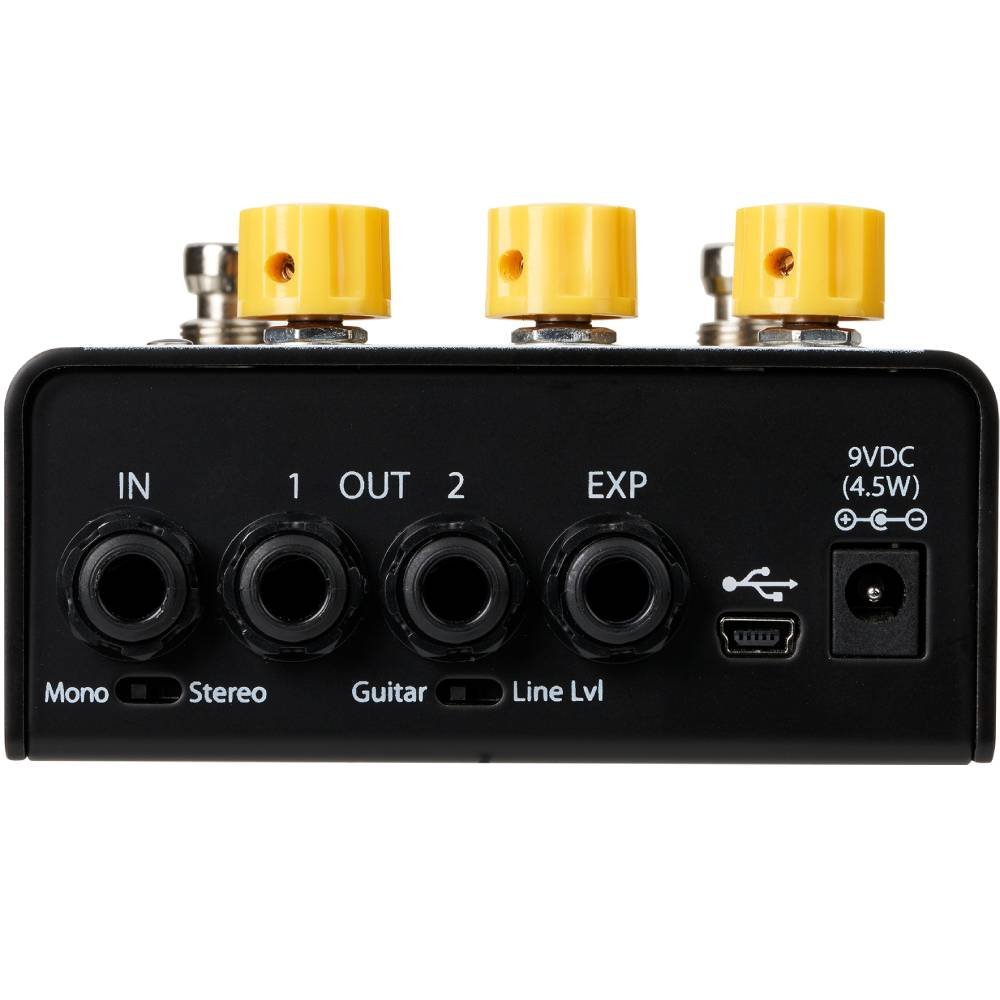
- Guitar/Line switch Rear-panel level matching for guitar, synth, an effects loop or an audio interface.
- Mono/Stereo switch Tells the TRS input whether to read a mono tip signal or a true stereo tip-and-ring pair.
Power and pedalboard compatibility
Runs on a 9V DC center-negative supply through a 5.5 mm / 2.1 mm barrel plug and draws up to 300 mA, so it needs an isolated 300 mA (or higher) output rather than a shared daisy chain. Eventide includes a universal power supply with US, EU, UK, JP and AU adapters. Power comes from the DC jack only; Eventide does not publish battery operation for this pedal. Bypass is selectable between Buffered, Relay, DSP+FX and Kill dry, so you can run relay (true) bypass at the front of a board or keep the buffer and effect tails alive inside an amp loop. A rear Guitar/Line level switch matches the pedal to a guitar, a synth, an effects loop or an audio interface, and a Mono/Stereo switch sets how the TRS input is read.
Technical specifications
| Type | Sub-octave fuzz with analog-style synth voice |
|---|---|
| Dimensions | 10.8 x 10.2 x 4.3 cm (L x W x H) |
| Algorithms and presets | Sub-octave fuzz with monophonic synth and resonant filter; five presets, onboard switching needs an aux switch, more over MIDI |
| Audio I/O | Input: 1/4" TRS (mono on tip, stereo on tip and ring). Out 1 and Out 2: 1/4" TS. |
| Control connections | EXP: 1/4" TRS for an expression pedal, an aux switch or MIDI I/O. Mini USB for software updates and MIDI. No 5-pin DIN MIDI and no Bluetooth on this model. |
| Maximum input level | +8 dBu (Guitar) / +14 dBu (Line) |
| Recommended load impedance | 10 kOhm |
| Collaboration | Eventide and Third Man Hardware |
| Weight | 480 g |
| Input impedance | 700 kOhm |
| Output impedance | 220 Ohm |
| Current draw | Up to 300 mA |
| Power | 9V DC center negative, 5.5 mm / 2.1 mm barrel, up to 300 mA; supply included |
| Signal path | Digital |
| Bypass | Selectable; relay (true) bypass available |
| Warranty | One year |
Reference: the official Eventide Knife Drop page and the official manual.
FAQ
Is Knife Drop polyphonic? The synth voice is monophonic, so it tracks single-note lines. The fuzz and octave sections process whatever you play, but the synth is designed for one note at a time.
Can I switch the octaves on mid-song? Yes. The octaves are footswitch enabled, so upper and sub octaves come in and out without reaching down to the pedal.
What does moving the filter before or after the distortion change? Filtering before the distortion shapes what gets crushed, giving a smoother, more synth-like result. Filtering after it sweeps the finished fuzz, which is rawer and more vocal.
Can I change presets from the pedal itself? Knife Drop holds five presets, but onboard preset switching requires an additional auxiliary switch on the EXP jack. More presets are available over MIDI or through H90 Control.
Who is Third Man Hardware? Knife Drop is an Eventide collaboration with Third Man Hardware, which is why the pedal carries a different visual identity from the rest of the .9 series.
Will a daisy chain power it? Not reliably. It draws up to 300 mA at 9V center negative, so use an isolated output rated 300 mA or more.