


About This Item
Description
The Meris Ottobit X is a full-stereo modular degradation and texture engine that pairs advanced bitcrushing with six glitch types, VHS-style delay and reverb, and a 16-step sequencer for deep '80s-inspired sound design.
Which Meris Ottobit X is this?
Ottobit X expands the original two-footswitch Ottobit Jr. into a full-stereo texture engine: volume-scaled bit crushing with dry blend, six glitch types including two one-button loopers (Push Loop and Wikki Wikki vinyl scratching), a 16-step sequencer assignable to roughly 48 parameters instead of a 6-step pitch/filter/rate sequencer, VHS-style delay and reverb, three filter types, five pitch types, and 99 presets across a color screen instead of 16. If you want Ottobit Jr.'s original compact two-footswitch layout, that pedal is sold separately as its own model on our site.
Why guitarists choose the Ottobit X
- Full-stereo bitcrushing and six glitch types cover everything from subtle lo-fi grit to full digital breakdown.
- Two one-button loopers capture and mangle phrases on the fly for live glitch performance.
- VHS-style delay and reverb add analog-tape-decay character on top of the digital destruction.
- 16-step sequencer rhythmically automates crush, glitch, and delay parameters for evolving textures.
- Color screen and 99 onboard presets make deep patches easy to build, name, and recall.
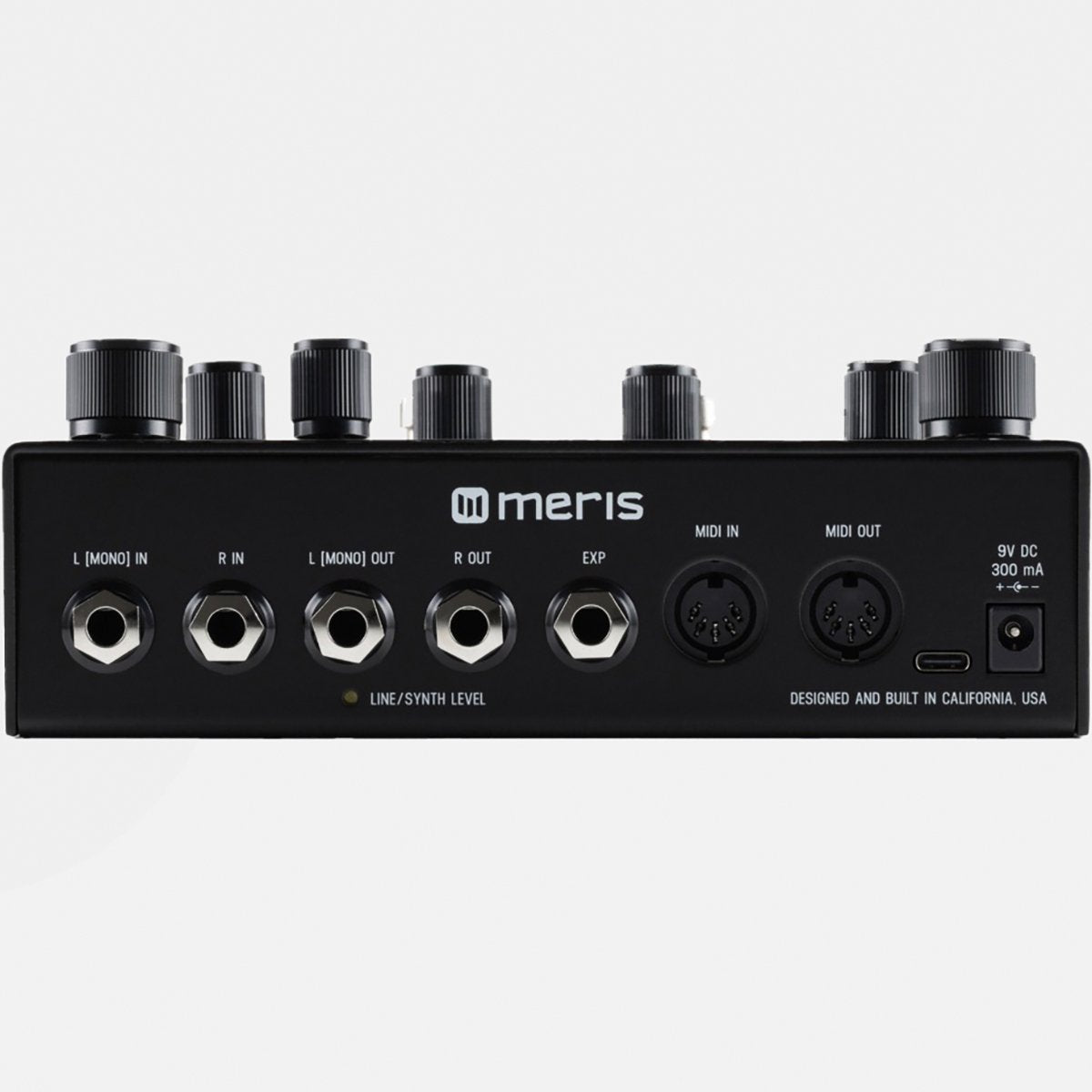
- Native 5-pin DIN MIDI In/Out plus USB-C give full remote control with no external converter box needed.
Controls and switches
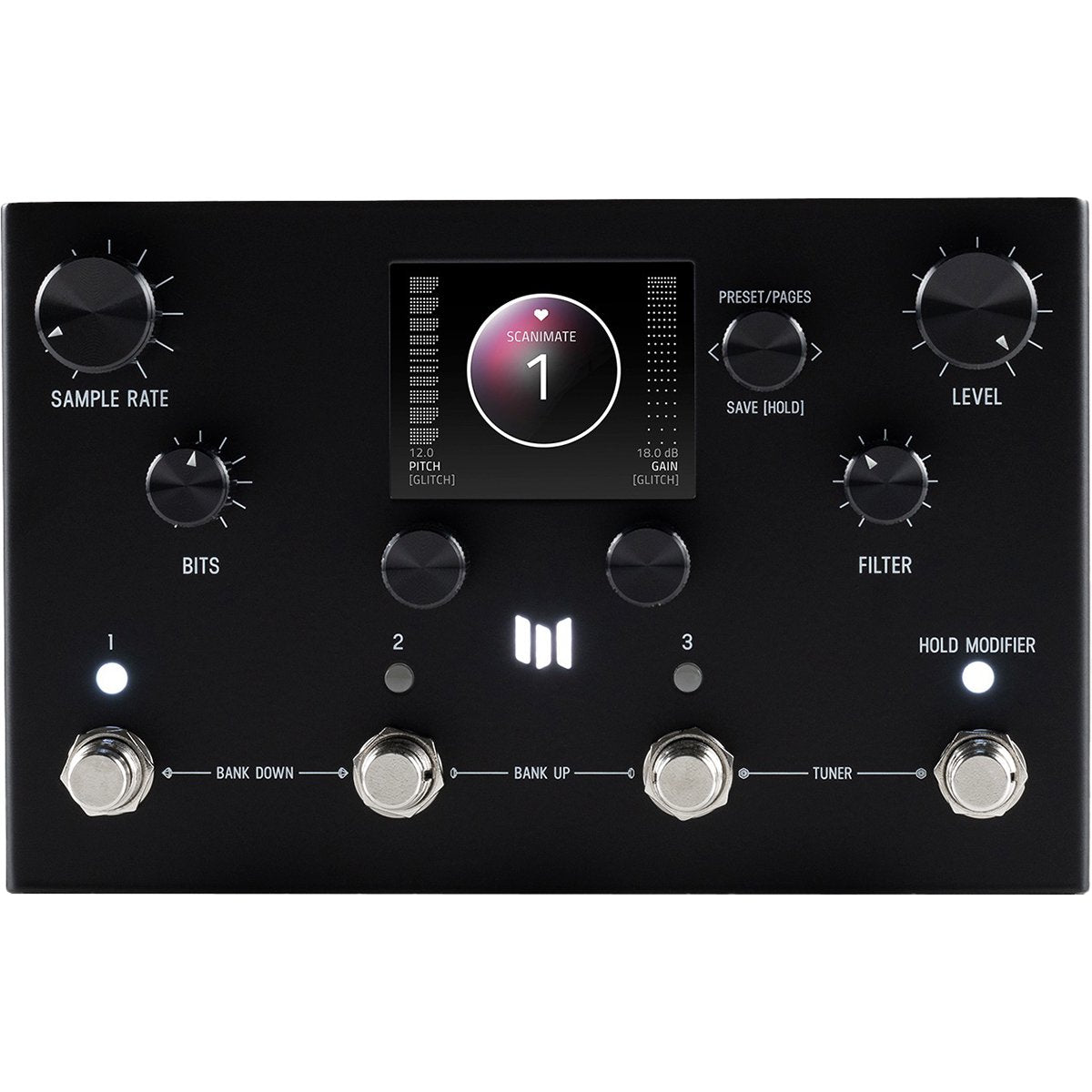
- Sample Rate — Sweeps sample rate from 48 Hz to 48 kHz, with volume scaling and dry blend for a more usable crush than a straight bit-reduction effect.
- Bits — Reduces bit depth from 24 bits down to 1 bit.
- Level — Sets overall output level and dry blend for the crushed signal.
- Filter — Sweeps the resonant filter cutoff across Ladder, State Variable, and Otto Tron envelope filter types.
- C1 / C2 navigation encoders — Select and edit a favorited parameter directly from the front panel.
- C3 encoder — Turns to change presets, pushes to enter edit mode, and holds to save — the way to browse Ottobit X's 99 presets across 33 banks.
- 4 LED buttons (1, 2, 3, Hold Modifier) — Mirror the four footswitches for desktop and studio use.
- Footswitches 1, 2, 3 — Engage or bypass presets, and can be configured for the Push Loop and Wikki Wikki one-button loopers depending on the glitch type loaded.
- Hold Modifier footswitch — An envelope generator switch configurable per preset as Momentary, Latching, or Tap Tempo action — set it to Tap Tempo to sync the sequencer and VHS delay without a dedicated tap footswitch.
Power and pedalboard compatibility
Ottobit X runs on 9V DC, center-negative, 2.1 mm barrel, drawing at least 300 mA — use an isolated multi-output supply rated for that current. The relay true bypass is mono only; running true stereo I/O, Trails, Spillover, or Kill Dry automatically switches Ottobit X to Analog Buffered Bypass, so plan pedalboard placement around whichever bypass mode your patch uses.
Technical specifications
| Model | Meris Ottobit X |
| Effect type | Modular Degradation and Texture Engine |
| Topology | Digital |
| Bypass | Selectable relay true bypass (mono only) or analog buffered bypass, which auto-engages with stereo I/O, Trails, Spillover, or Kill Dry |
| Input impedance | 1000 kΩ |
| Power | 9 Volt DC, center-negative, 2.1 mm barrel |
| Current draw | 300 mA |
| Expression input | Yes |
| Onboard presets | Yes |
| Tap tempo | Yes (Tap tempo is available by configuring the Hold Modifier footswitch to Tap Tempo action per preset, rather than from a dedicated tap footswitch.) |
| Enclosure dimensions | 11.43 × 18.42 × 5.08 cm |
| Weight | 680.4 g |
| GTIN | 850015619120 |
FAQ
What glitch types does Ottobit X have?
Six: Grain Freeze, Stutter, two one-button loopers (Push Loop and Wikki Wikki vinyl scratching), Tape Stop, and Stutter Step.
Does Ottobit X have delay and reverb?
Yes. Two ambience types, VHS Reverb and VHS Delay, including a dual 2500 ms VHS Delay with play-speed manipulation.
What is the difference between Ottobit X and Ottobit Jr.?
Ottobit X adds volume-scaled crushing with dry blend, six glitch types with two one-button loopers, VHS delay and reverb, and a 16-step sequencer across 99 presets. Ottobit Jr. is the original compact two-footswitch version, sold as a separate model on our site.
What finishes are available?
A standard-run Matte Black, or a Limited Edition Multidimensional Pink small run.
Does Ottobit X work with the Meris Preset Switch?
No. The Preset Switch is officially listed as compatible only with Ottobit Jr., Mercury7, Polymoon, Enzo, and Hedra; Ottobit X handles presets from its own front panel and over MIDI.
Does Ottobit X need the Meris MIDI I/O box?
No. Ottobit X has its own 5-pin DIN MIDI In/Out jacks plus MIDI over USB-C on firmware 1.5 and later.
What power supply does Ottobit X need?
9V DC, center-negative, 2.1 mm barrel, at least 300 mA. A power supply is not included.