


About This Item
Description
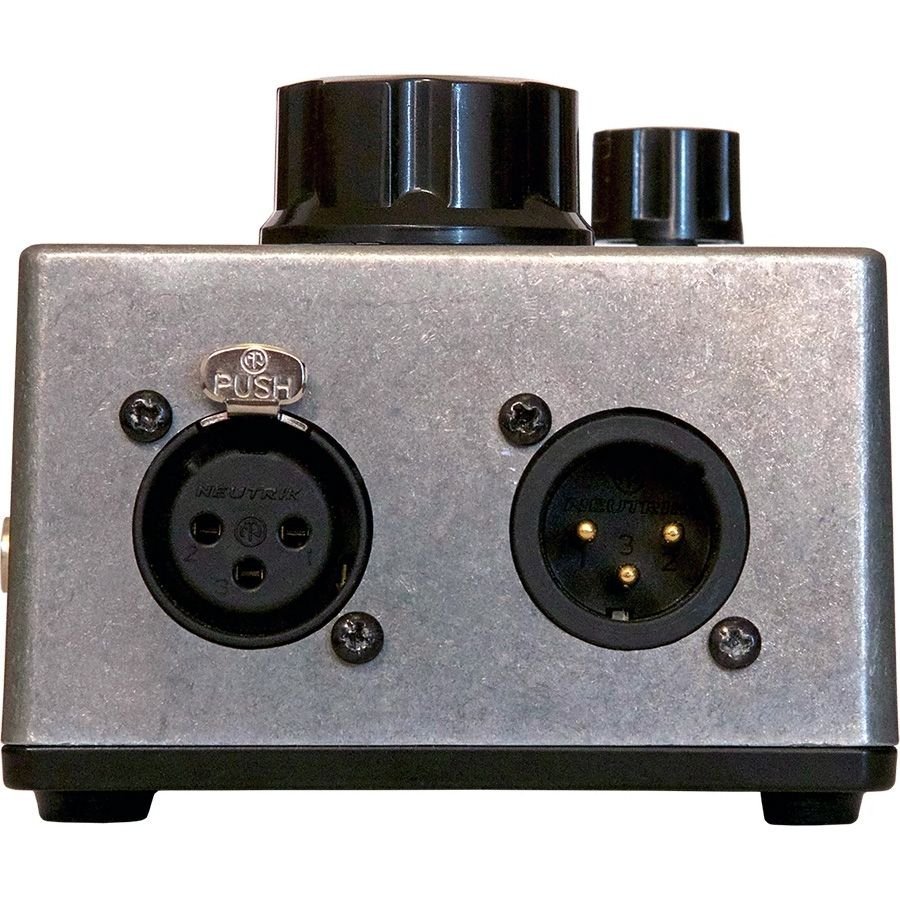
A tape style echo built for a microphone, not a guitar amp. Echo Master is a lo fi, analog tape style delay designed for vocals. Matched Bourns input transformers create a vibrant, feedback minimizing transformer balanced microphone preamp, Neutrik XLR connectors handle the signal, and an impedance matched effects loop lets other pedals join the vocal chain.
Which Death by Audio echo is this?
- Echo Dream 2: the quarter inch instrument echo with modulation and fuzz.
- Dream Station: instrument level stereo reverb and delay.
- Reverberation Machine: instrument level saturated reverb.
Echo Master is the only unit in this group with XLR connections and a microphone preamp, so it is the one that belongs on a mic stand rather than a pedalboard.
Why singers choose the Echo Master
- Transformer balanced XLR input and output let it sit in a live vocal chain without unbalanced adapters.
- The voicing is chosen to avoid the shriek that usually arrives when a delay meets a stage monitor.
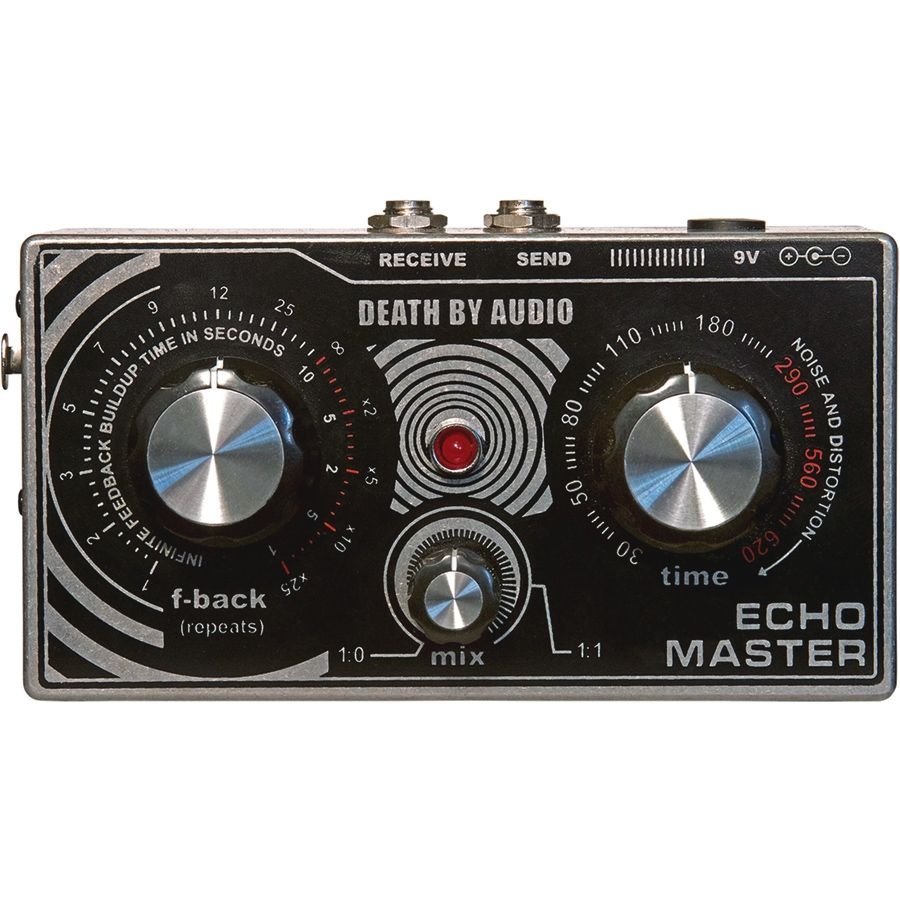
- The delay scale is printed in milliseconds with a red zone that shows exactly where the chip starts to break up.
- The effects loop sits before the echo and affects both dry and delayed vocals, so other pedals can join the chain cleanly.
- The Send jack can be used on its own to split a clean copy of the vocal.
- Handmade in New York with a lifetime warranty.
Controls and switches
- TIME sets the delay from 30 ms to 620 ms. In the marked Red Zone the delay chip is pushed beyond its comfort zone and fidelity drops as time increases.
- F-BACK sets the number of repeats, from one to infinite to a wall of oscillation, with a red scale showing feedback buildup time in seconds.
- MIX balances the dry vocal against the echo.
- SEND and RECEIVE form an effects loop before the echo, which is not affected by the Mix control.
- There is no bypass footswitch. The unit is always on.
Power and pedalboard compatibility
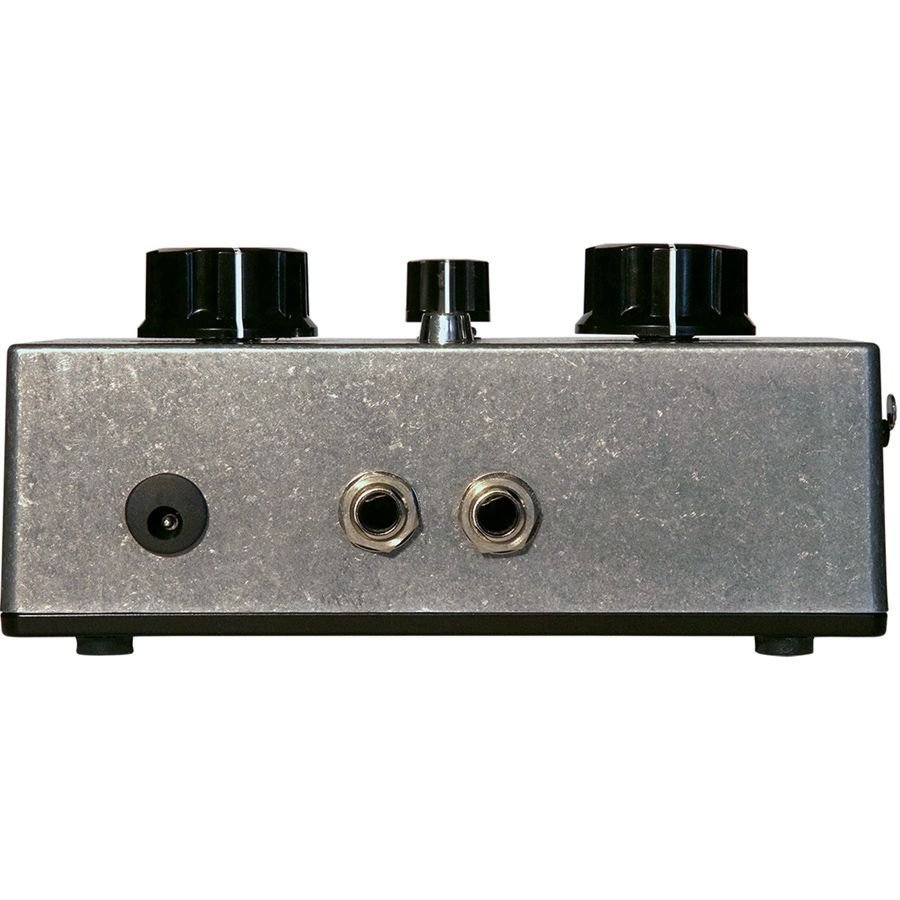
- Runs on 9 V DC, 2.1 mm barrel, center negative.
- Current draw is 25 mA, so budget that on your supply.
- Death By Audio does not publish battery operation for this one, so plan on a regulated DC supply.
- Jacks sit along the top edge, which keeps patch cables out of the row in front.
- Routing: Mono vocal signal path (single XLR in / XLR out plus a mono FX loop).
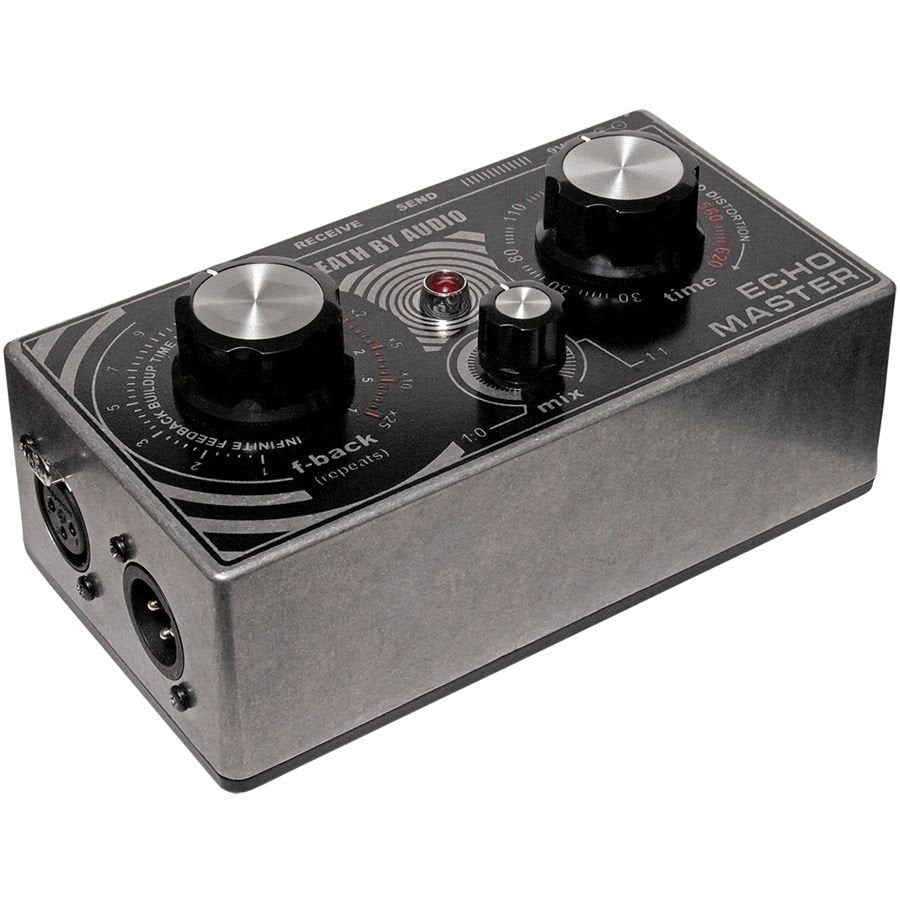
- It measures 15.47 x 8.76 x 6.99 cm including hardware, so measure your row before ordering.
Technical specifications
| Model | Death by Audio Echo Master |
| Effect type | Vocal tape style delay |
| Controls | Time, F-Back, Mix, Send and Receive effects loop |
| Expression or CV input | No |
| Power | 9 V DC, 2.1 mm barrel, center negative |
| Current draw (mA) | 25 |
| Top mounted jacks | Yes |
| Routing | Mono vocal signal path (single XLR in / XLR out plus a mono FX loop) |
| Dimensions including hardware | 15.47 x 8.76 x 6.99 cm |
| Weight | Standard: 16 oz.; Alternate (mic stand clip) Back Plate: 30 oz. |
| MPN | 720260152287 |
| GTIN | 720260152287 |
| ASIN | B07C32G4BC |
| Manufacture and warranty | Handmade in New York City, lifetime warranty from Death By Audio |
FAQ
Does it pass phantom power? No. The official Death By Audio FAQ states the Echo Master will not pass +48 V phantom power through its XLR connections.
What level does it output? Death By Audio describes the output as closer to microphone level than line level, so treat it as a mic level device at the desk.
Is there a bypass switch? No. The Echo Master is always on, so set the Mix control to taste and leave the unit in the chain.
Where does the effects loop sit? The loop is placed before the echo. The manual notes that it affects both dry and delayed signals and is not controlled by the Mix knob.
Why does the delay get noisy at long times? Above roughly 290 ms the delay chip is being pushed beyond its intended specification, which is what creates the lo fi noise and distortion marked on the Red Zone scale.
What is included? A 9 VDC power supply in a US or EU version. Cords, a microphone and a stand are not included, and the mic stand clip backplate is offered separately.
Do I connect power or audio first? Connect the power supply before plugging in the XLR cables, as the manual instructs.