


About This Item
Description
ISP's latest patented noise-reduction technology eliminates hum and hiss between notes while an Integration Release Window keeps long, sustained notes decaying naturally instead of choking off.
Which ISP Decimator is this?
ISP's noise-reduction line has two generations. The compact micro pedals — Deci-Mate and Deci-Mate G — use the earlier analog Decimator circuit. The full-size Decimator X and Decimator X G String use the newest patented Integration Release Window technology (US Patent 11,641,183) that keeps long sustained notes decaying naturally.
- vs. Deci-Mate Micro: The Deci-Mate Micro is a smaller, true-bypass pedal using ISP's earlier Decimator circuit without the Integration Release Window; the Decimator X is full-size, buffered bypass, and uses the newer patented X technology with link/stereo capability.
- vs. Deci-Mate G: The Deci-Mate G is a micro pedal with a 3.5mm loop for direct-guitar tracking on ISP's earlier circuit; the Decimator X is full-size with the newest Integration Release Window technology, 1/8-inch link jacks for stereo/dual-channel setups, and buffered bypass instead of a loop-based design.
- vs. Decimator X G String: Decimator X G String adds dedicated Guitar In/Out and Dec In/Out jacks (four 1/4-inch jacks total) so it can sit in front of the amp while looping other pedals into the effects return; the standard Decimator X has only one input and one output, making it the simpler single-channel option.
Why guitarists choose this pedal
- Newest ISP noise-reduction generation (2024 release), covered by a new US patent (11,641,183)
- Integration Release Window adaptively slides based on the signal's negative peaks, virtually eliminating choppy modulation on decaying notes
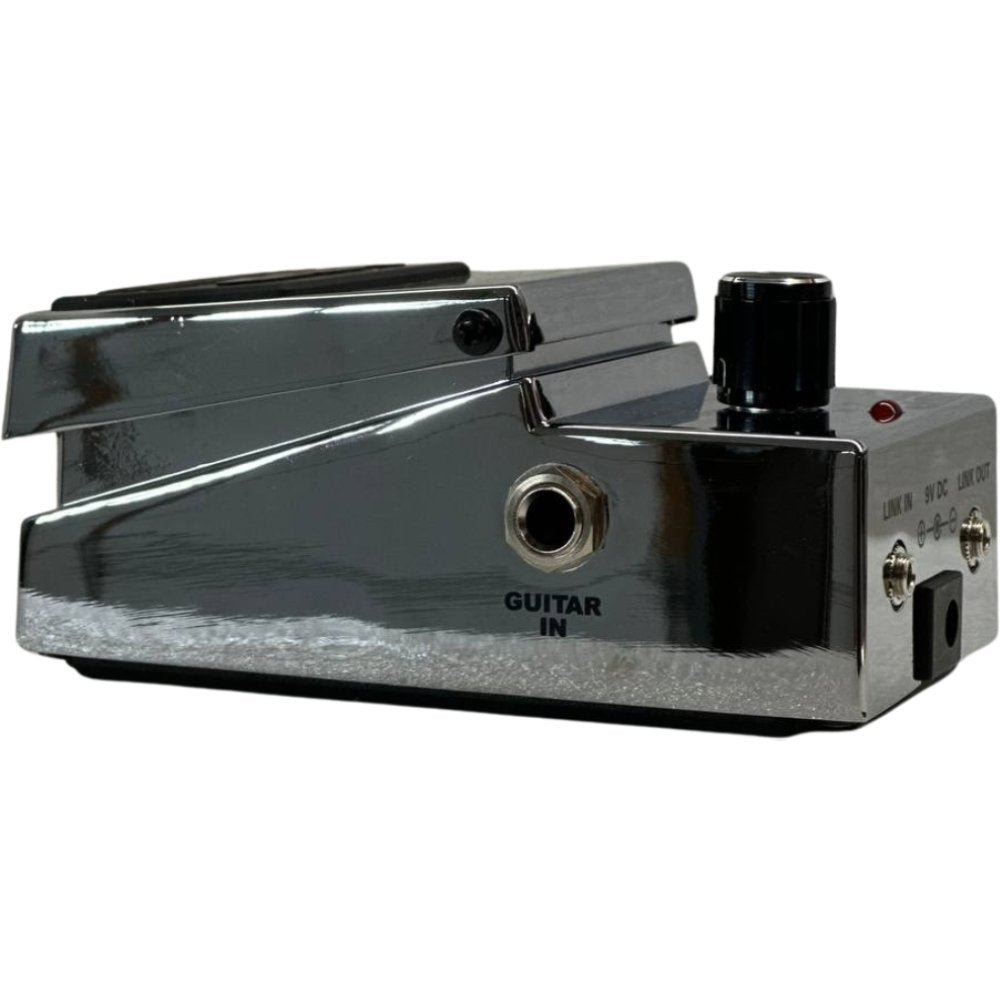
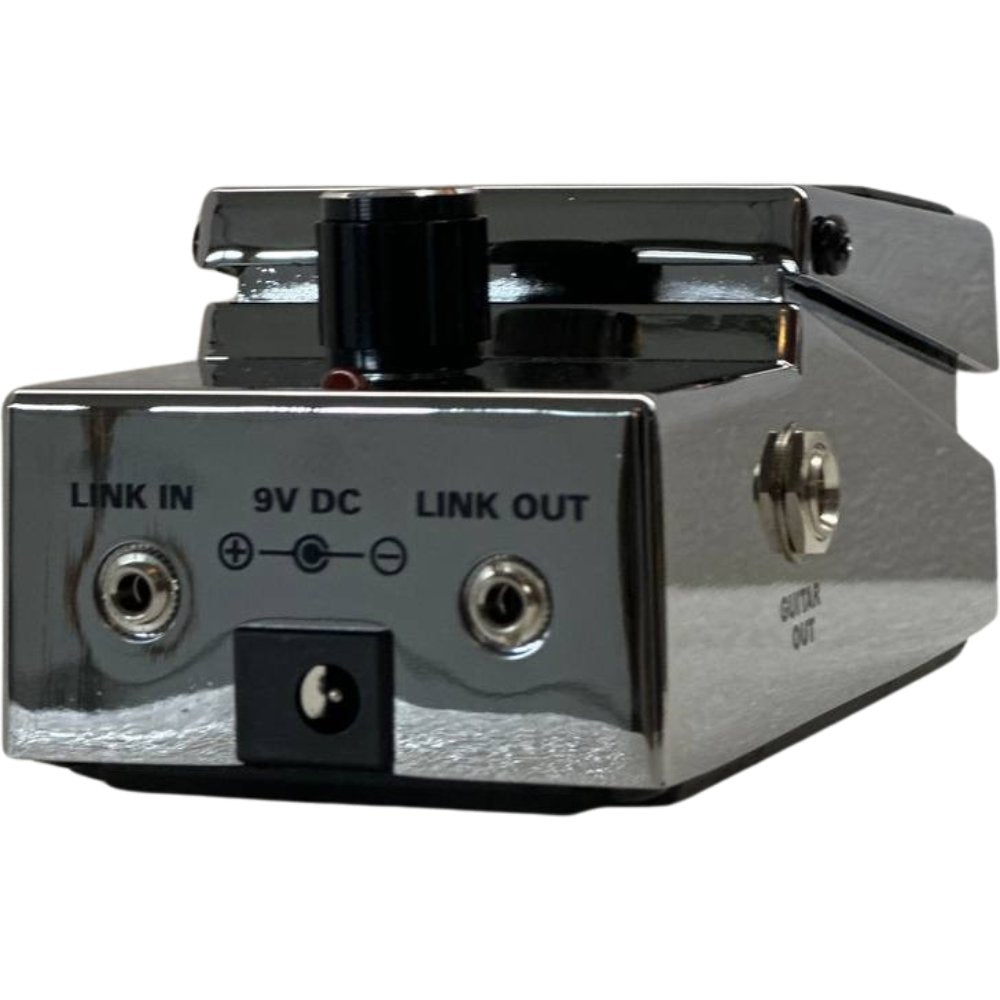
- LINK IN/LINK OUT via 1/8-inch cable lets two Decimator X units be chained for dual-channel or true stereo noise reduction, mimicking the pro rack-mount Decimator ProRack G
- Runs on either 9V battery or adapter, unlike some full-size noise gates that require external power only
Controls and switches
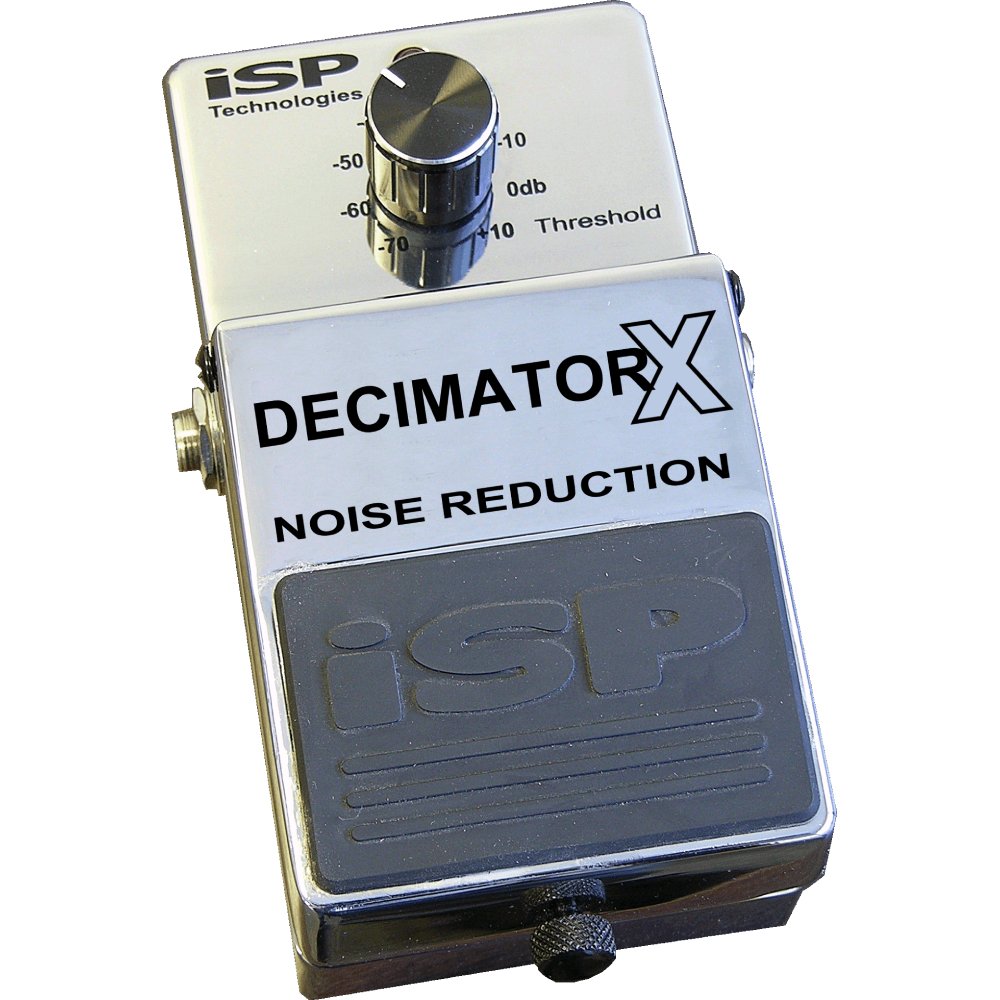
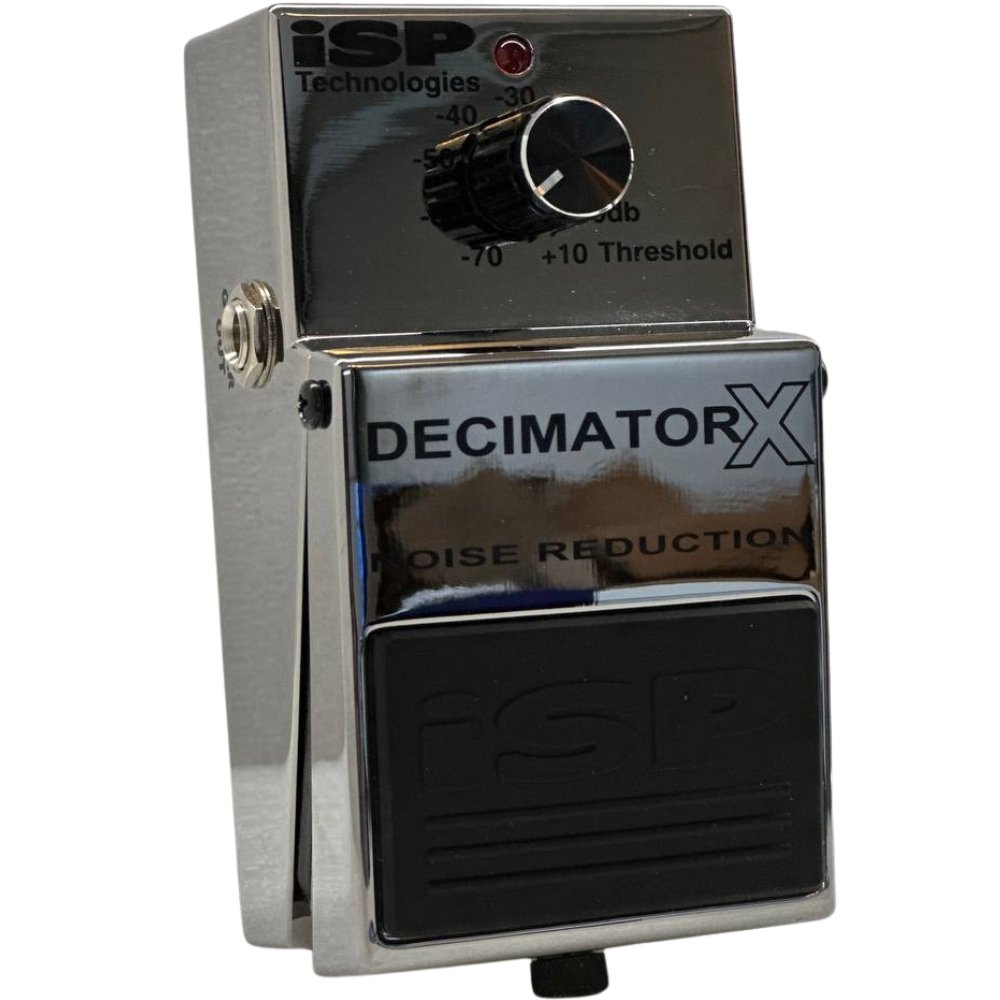
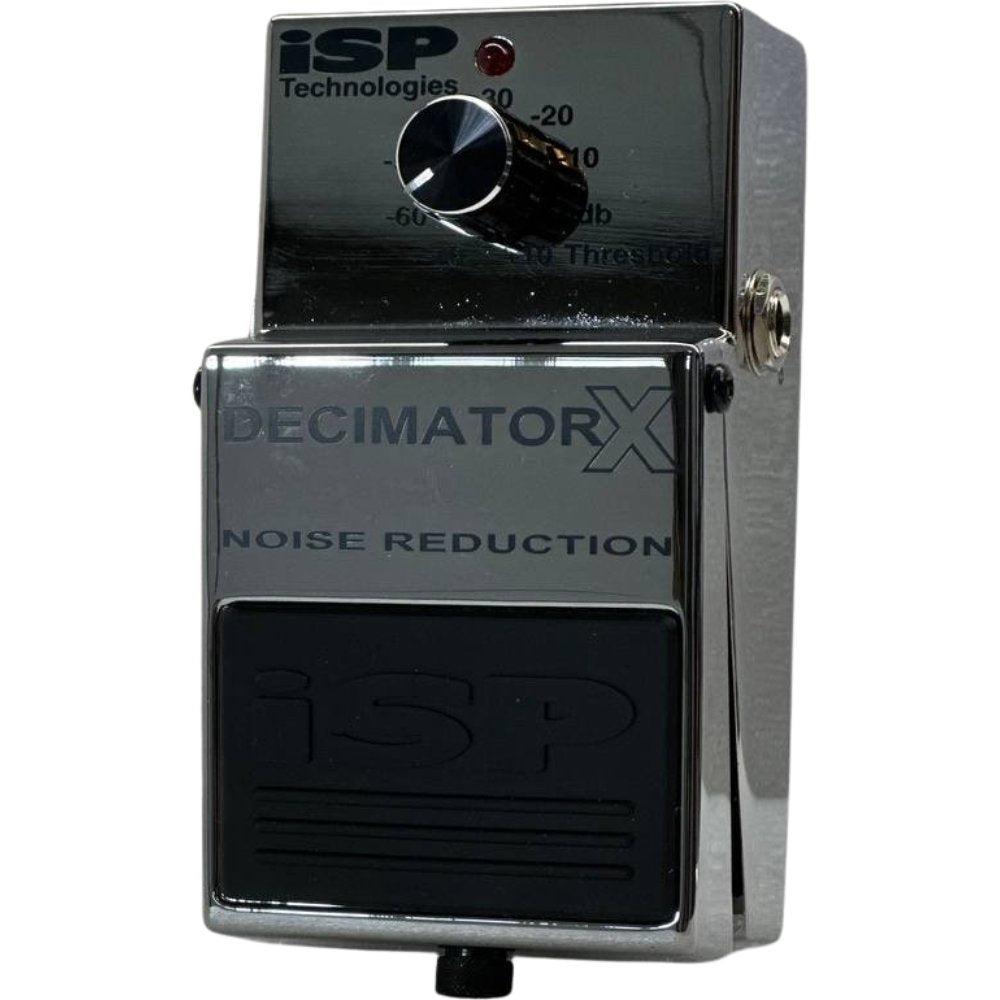
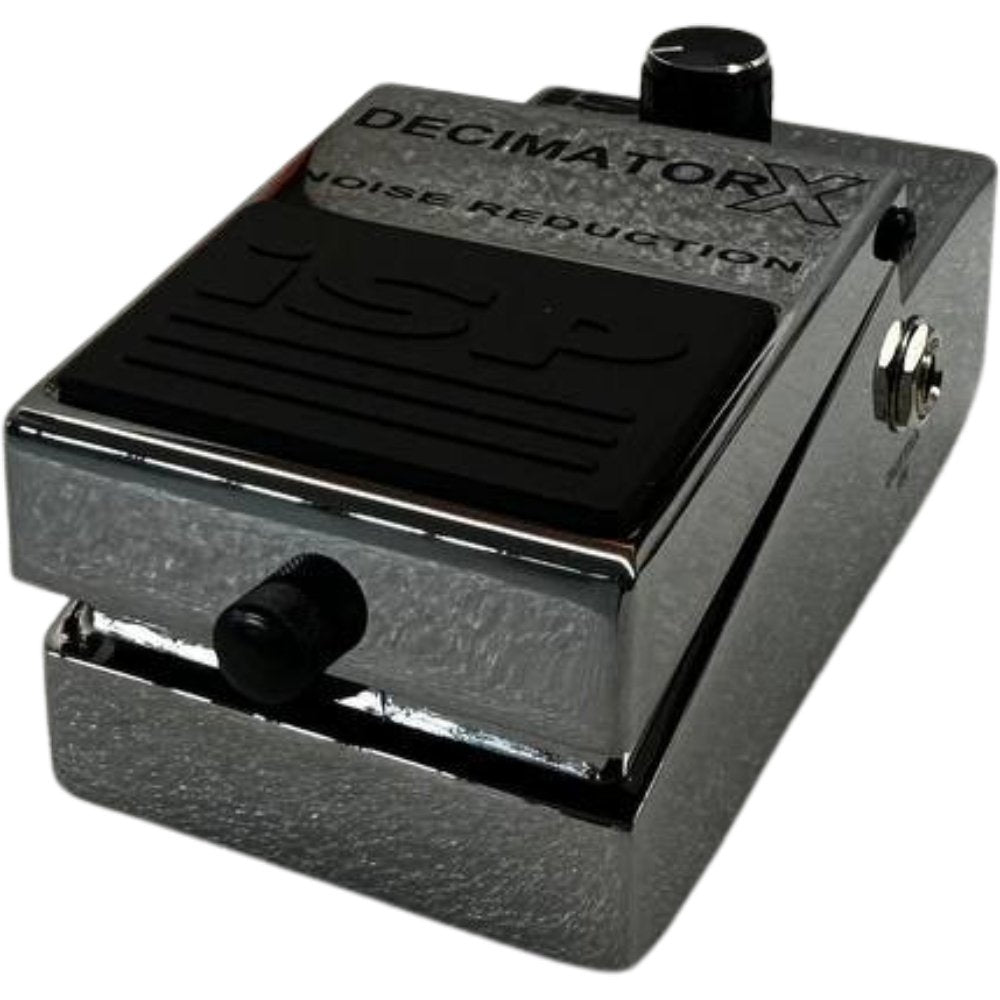
- Threshold knob (marked from -70 to +10 dB) – adjust clockwise while no signal is playing until the noise floor becomes inaudible; readjust with guitar volume maxed to account for added guitar noise
Power and pedalboard compatibility
- Voltage: 9V DC
- Current draw: 35 mA
- Polarity: center negative (tip negative), standard 5.5 × 2.1 mm barrel
- Battery: yes – 9V battery accepted via internal compartment (thumbscrew access), or external 9VDC adapter rated at least 100mA
- Bypass: Buffered bypass
- Signal-chain placement: gain stages (overdrive, distortion, high-gain preamps) go before the pedal; delay and reverb after, so their tails stay natural.
Technical specifications
| Model / SKU | ISP Technologies Decimator X Noise Reduction Pedal · SKU 898182001591 |
|---|---|
| Barcode (GTIN) | 898182001591 |
| ASIN | B0D87L4N1V |
| Topology / Technology | Patented Decimator X Technology (US Patent 11,641,183) using an adaptive Integration Release Window and linearized Time Vector Processing for ripple-free downward expansion on both staccato and sustained notes |
| Bypass | Buffered bypass |
| Power | 9V DC |
| Current draw | 35 mA |
| Battery | yes – 9V battery accepted via internal compartment (thumbscrew access), or external 9VDC adapter rated at least 100mA |
| Connections | 1/4-inch input, 1/4-inch output, 1/8-inch (3.5mm) LINK IN, 1/8-inch (3.5mm) LINK OUT, 9VDC adapter jack |
| Enclosure (L × W × H) | 12.7 x 6.9 x 5.8 cm |
| Weight | 454 g |
| Warranty | 3-year warranty on parts and workmanship from date of purchase; must register online at isptechnologies.com to activate |
Frequently asked questions
What is the Integration Release Window?
It's ISP's patented technology that holds a slow release response until a note's decay exceeds a set decibel window, then adaptively slides that window down with the signal — this removes choppy modulation on long sustained notes while still reacting instantly to staccato playing.
Can the Decimator X run on a battery?
Yes, it accepts a standard 9V battery via an internal compartment, or a 9VDC adapter rated at least 100mA, center/tip negative.
How do I link two Decimator X pedals?
Connect an RTS 1/8-inch cable from the LINK OUT of the first pedal to the LINK IN of the second; this lets the second pedal's detector track the direct instrument input for dual-channel or stereo tracking similar to the rack-mount Decimator ProRack G.
Where should I place the Decimator X in my signal chain?
Place all gain pedals in front of the Decimator X; put delay and reverb after it so their trails are not cut off. In an amp's effects loop, connect amp Send to the pedal's input and amp Return to the pedal's output.
Is the Decimator X true bypass?
No, it uses buffered bypass, unlike ISP's Deci-Mate micro pedals which are true bypass.
How is Decimator X different from the older Decimator II?
Decimator X replaces the older Linear Time Vector Processing found in the Decimator II with the newer patented Integration Release Window, giving smoother, more adaptive release behavior, especially on slow-decaying notes.